

.png)
.png)

From Obligation to Operating Practice
How Jamaica’s Ministry of Agriculture, Fisheries and Mining built the foundations of an institution-owned data protection programme with ScanBox Limited.
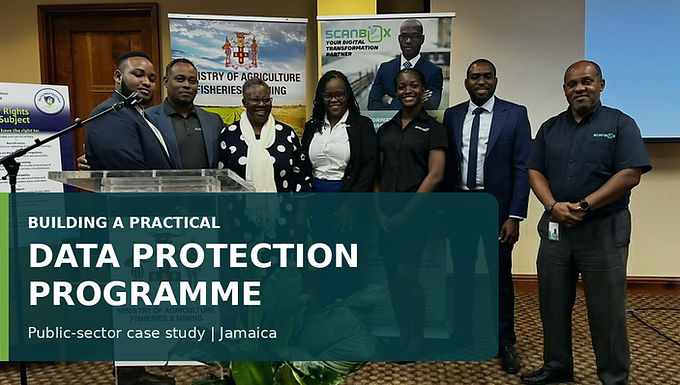
How can a public authority turn data protection obligations into operating practice?
A public authority can operationalise data protection by connecting governance roles, records of processing, usable notices and procedures, records-management controls, staff capability and an ongoing review cycle. In its engagement with Jamaica’s Ministry of Agriculture, Fisheries and Mining, ScanBox structured this work across four connected moves: diagnose the environment, build the instruments, make processing visible and transfer capability to institutional owners.
The brief was never just to write policies
Data protection becomes credible only when an institution can run it: when people know what they own, processing can be seen, procedures can be used, decisions can be evidenced and the programme can survive the end of a consultancy.
That distinction shaped the Ministry engagement. ScanBox did not treat privacy as a document-production exercise. The work connected diagnosis, governance, records management, processing visibility, procedures, training and handover—so each output had a role in the next phase.
This case study explains the programme logic and the organisational movement reported in the Ministry’s completed client feedback. It is not an independent audit, certification, legal opinion or guarantee of compliance.
The public-sector context: privacy as operating discipline